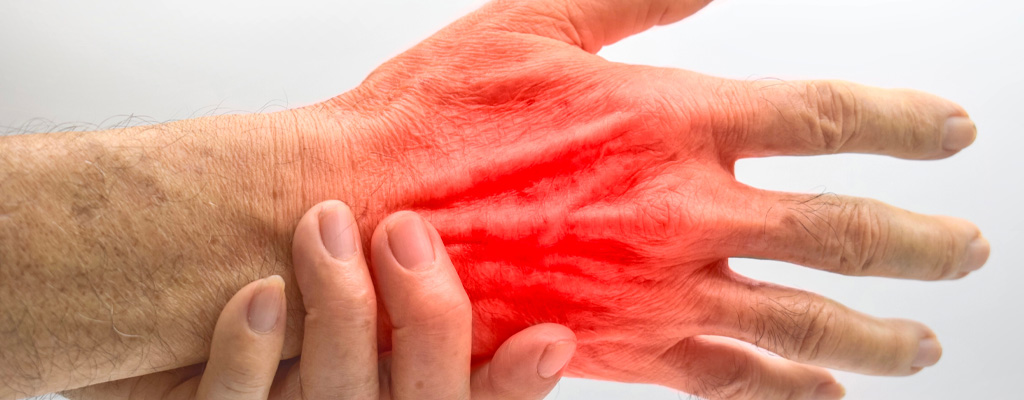
Remember the last time you accidentally slammed your funny bone? That sharp, radiating pain is deeply unpleasant — fortunately, it usually only lasts a few moments. But what happens when that pain lingers? If you’re dealing with pain in your elbow, forearm, or wrist, Aspen Ridge Physical Therapy is here to help!
Wrist and elbow pain can have several potential causes. Three major nerves run through the arm and can become entrapped, leading to numbness, tingling, and pain. You can also injure the muscles, tendons, or ligaments in the elbow and wrist joints, which can cause mobility restrictions and pain in the impacted area.
Our team of physical therapists will help you get to the bottom of your elbow pain — and we’ll help you find a way to resolve that pain for good. Call us to schedule an appointment and get started today!
A Closer Look at the Causes of Wrist and Elbow Pain
When you come in for your appointment, the first thing we’ll do is carefully review your symptoms and run a few simple movement screens to help pinpoint the cause of your pain.
Overuse injuries are one of the more common causes of wrist and elbow pain. You’ve probably heard of conditions such as tennis elbow or golfer’s elbow — both are examples of overuse injuries. They stem from repetitive movements or awkward postures that strain the joint’s soft tissue, leading to a gradual onset of symptoms.
You can also suffer acute injuries, particularly in the wrist. These injuries happen suddenly rather than over time. Wrist sprains, in which the ligaments in the wrist suffer damage, are among the most common. You can also fracture the bones in your wrist and elbow, which will typically require medical intervention.
Nerve disorders are another common source of discomfort in the elbow, forearm, and wrist. They occur when one of the nerves running through the arm becomes entrapped, leading to pain, numbness or tingling, and mobility restrictions. The location of your symptoms can let you know which nerve is affected:
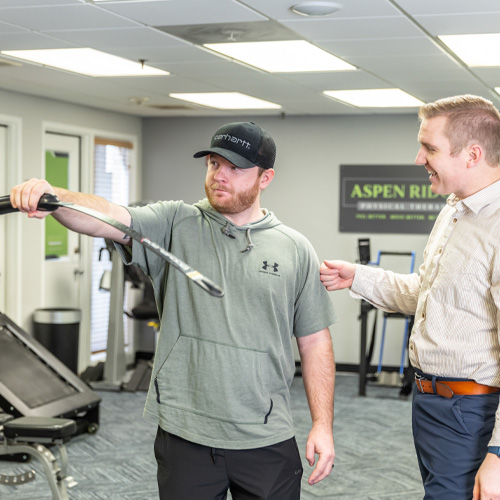
- Carpal tunnel syndrome affects the median nerve and can become trapped in a structure in your wrist (the carpal tunnel). You’ll typically experience symptoms in your wrist and hand.
- Cubital tunnel syndrome affects the ulnar nerve, which passes through a narrow structure in your elbow (the cubital tunnel). If the nerve becomes entrapped in the cubital tunnel, it can cause symptoms in your elbow and hand.
Finally, arthritis can affect your elbows and wrists, leading to pain and restricted range of motion.
What Physical Therapy Can Do to Help Ease Your Wrist and Elbow Pain
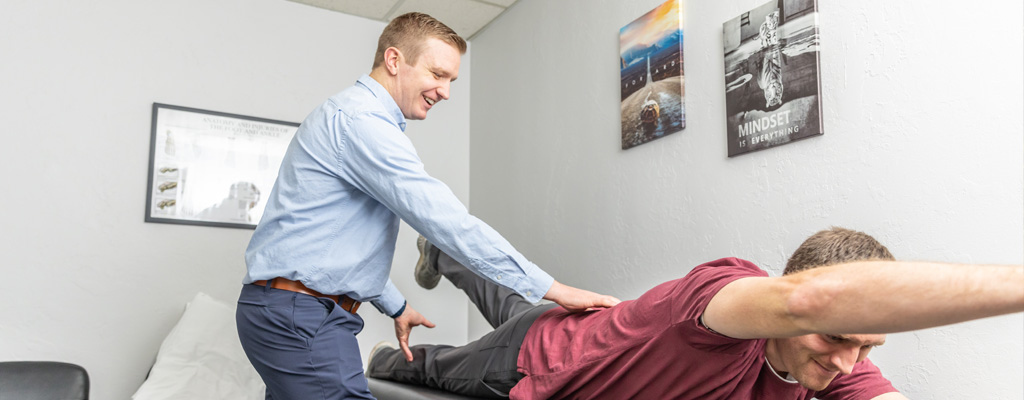
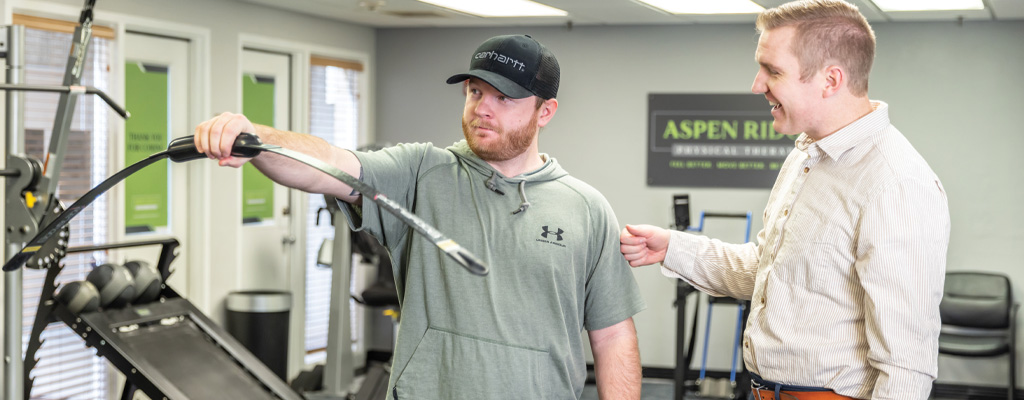
Once our therapist has determined the source of your pain, we’ll develop a customized treatment program to help you find relief. The good news is that physical therapy alone can resolve most common sources of wrist and elbow pain. Here are a few of the techniques we might incorporate into your program:
Manual Therapy:
Therapeutic Exercises:
Braces and Splints
Injury Prevention:
Let’s Get to the Root of Your Wrist or Elbow Pain!
Pain in the wrist or elbow can seriously impact your quality of life, making it difficult to perform day-to-day movements like brushing your teeth, typing on a computer, or preparing a meal. The team at Aspen Ridge Physical Therapy will help you get to the bottom of your pain to find lasting relief.
Call us to schedule your initial appointment today!

Your Success Is Our Priority!
Return to Aspen Ridge Physical Therapy and Let’s Continue Your Journey to Wellness Together. Schedule Your Appointment Now!
Exercise of the Month
TOWEL PULL
Sit or stand tall and place a rolled towel behind your head, holding each end with your hands in front of you. Gently pull the towel forward and downward to support your head as you slowly extend your neck backward, looking up toward the ceiling. Use the towel for support—not force. Return to the starting position.
3 Sets, 10 Reps. (Materials needed: towel)
Welcome to the Team:
Vanessa Alleruzzo
Dr. of Occupational Therapy, Certified Hand Therapist (OTD, OTR/L, CHT)
Vanessa grew up in Southern California, but has lived all over. She attended college at Duquesne University in Pennsylvania, graduate school at Indiana Wesleyan University in Indiana, studying abroad on three continents, and worked for years as a traveling Occupational Therapist. She settled in Utah with her husband—whom she met in Alaska—and is excited to bring her diverse background in Hand Therapy to Aspen Ridge.
Vanessa began pursuing her Certified Hand Therapist (CHT) credential in 2017 after a clinical rotation in Ketchikan, Alaska. Since then, she has dedicated much of her career to advancing her clinical skills, earning a distinction held by only about 7,000 practitioners worldwide.
As an Occupational Therapist, Vanessa values whole-person care and helping clients thrive in their daily lives. As a CHT, she enjoys applying specialized expertise to efficiently and effectively achieve her clients’ goals.
Outside the clinic, Vanessa enjoys outdoor adventures with her husband and dogs, snowboarding, yoga, winning fantasy football, exploring new foods, and traveling. She is excited to call Utah home and build a community at Aspen Ridge Physical Therapy.



This Crock Pot Irish Stew is a hearty, comforting classic that’s perfect for celebrating St. Patrick’s Day. Slow-cooked and full of rich flavor, it’s an easy, cozy meal to enjoy with family and friends. 🍀
Enjoy This Healthy Recipe!
Best St. Patrick’s Day Crock Pot Irish Stew
- 2 lbs beef chuck roast, cubed
- 2 large potatoes, peeled and diced
- 2 cups diced carrots
- 1 envelope onion soup mix
- 2 (10¾ oz) cans tomato soup
- 1 soup can water
- 16 oz frozen peas
- salt and pepper, to taste
- parsley, for garnish
- Combine beef, potatoes, carrots, soup mix, tomato soup, can of water, salt and pepper in Crock Pot.
- Cook on LOW 8 hours.
- Add frozen peas and ¼ cup water.
- Cook on LOW 1 additional hour.
- Garnish with parsley.
Follow Us on Social Media!
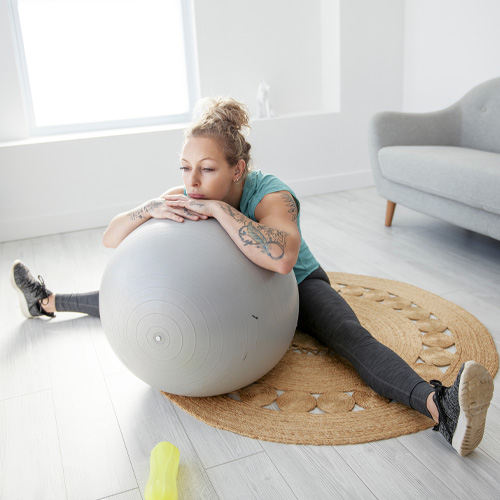
Exercise & Mental Health
Everyone knows that regular exercise is good for the body. But exercise is also one of the most effective ways to improve your mental health. Regular exercise can have a profoundly positive impact on depression, anxiety, ADHD, and more. It also relieves stress, improves memory, helps you sleep better, and boosts overall mood. And you don’t have to be a fitness fanatic to reap the benefits. Research indicates that modest amounts of exercise can make a difference. No matter your age or fitness level, you can learn to use exercise as a powerful tool to feel better.
Exercise and depression. Maintaining an exercise schedule can prevent you from relapsing. It promotes all kinds of changes in the brain, including neural growth, reduced inflammation, and new activity patterns that promote feelings of calm and well-being. It also releases endorphins, powerful chemicals in your brain that energize your spirits and make you feel good. Exercise can also serve as a distraction, allowing you to find some quiet time to break out of the cycle of negative thoughts that feed depression.
Exercise and anxiety. Anything that gets you moving can help, but you’ll get a bigger benefit if you pay attention instead of zoning out. By adding this mindfulness element—really focusing on your body and how it feels as you exercise—you’ll not only improve your physical condition faster, but you may also be able to interrupt the flow of constant worries running through your head.
Exercise and ADHD. Exercising regularly is one of the easiest and most effective ways to reduce the symptoms of ADHD and improve concentration, motivation, memory, and mood. Physical activity immediately boosts the brain’s dopamine, norepinephrine, and serotonin levels—all of which affect focus and attention.
Exercise and PTSD and trauma. Evidence suggests that by really focusing on your body and how it feels as you exercise, you can actually help your nervous system become “unstuck” and begin to move out of the immobilization stress response that characterizes PTSD or trauma. Instead of thinking about other things, pay close attention to the physical sensations in your joints and muscles, even your insides as your body moves. Exercises that involve cross movement and that engage both arms and legs—such as walking (especially in sand), running, swimming, weight training, or dancing—are some of your best choices.
Outdoor activities like hiking, sailing, mountain biking, rock climbing, whitewater rafting, and skiing (downhill and cross-country) have also been shown to reduce the symptoms of PTSD.
When you’re under the cloud of an emotional disorder and haven’t exercised for a long time, setting yourself extravagant goals like completing a marathon or working out for an hour every morning will only leave you more despondent if you fall short. Better to set yourself achievable goals and build up from there.
Share Your Success Story
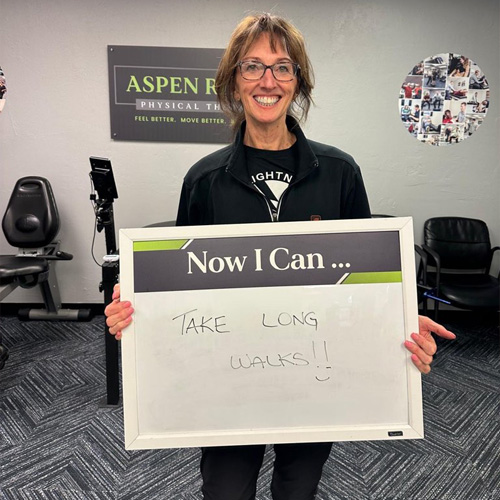
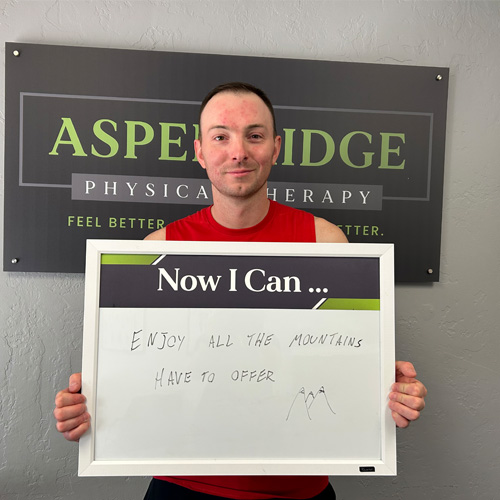
Your journey to recovery is important to us, and we’re proud to have been a part of it! If Aspen Ridge Physical Therapy has helped you feel stronger, move better, or get back to doing what you love, we’d be honored if you shared your experience in a Google review. Your story could encourage someone else to take the first step toward healing!
Our Patients Get Great Results
“Aspen Ridge physical therapy is one of the best physical therapies I’ve ever been to, and I was usually a little shaken by going to a physical therapist. Aspen Ridge made it so comfortable, so fun, so amazing. I’m feeling better, and I thank Aspen Ridge and their staff, they’re an amazing staff. I give Aspen Ridge a five-star rating; I wish I could go higher with a 10-star. But I give them a five-star and thank you so much, Aspen Ridge and staff, for making me feel better. Thank you ❤️”
-C.L.